
The Hidden Skill Players Aren’t Training
Most players have never been taught how to actually see the game.

Players Today Are Only Seeing 20% of the Game
One of the questions I got during the first live Coaching Series this week was about the biggest adjustment players struggle with going from high school basketball to college basketball.
And honestly, for me, the answer came pretty fast.
Defensive awareness.
Not effort. Not toughness. Not athleticism.
Awareness.
Actually seeing the game.
And the more I’ve thought about it over the last couple years, the more I think this issue is bigger than basketball itself. Because players today consume basketball completely differently than they used to.
Everything is highlights now. Short clips. Mixtapes. Reels. Ten-second possessions cut perfectly so all you see is the move, the shot, the celebration.
Even when players are “watching basketball,” they’re usually not really watching basketball. They’re watching the ball. And when that’s how you consume the game all the time, eventually that becomes how you see the game when you play too.
You only lock onto one thing at a time. Either the ball or your man, and lose the other.
But the real game is usually happening somewhere else. Weakside movement. Spacing. Screening.
That’s the stuff young players are missing right now and not even taking in. And honestly, I don’t think we talk about it enough.
Another coach on the call mentioned that almost none of his players consistently watch basketball. Not NBA games. Not college games. Nothing. And I just sat there thinking about how hard it is to develop defensive awareness if your eyes never practice seeing the game.
Because defensive awareness is pattern recognition.
That’s really all it is.
Seeing actions before they fully happen. Recognizing danger early. Feeling where the next pass is probably going before it gets there. And if you never train that part of your brain, then yeah, defense is going to feel overwhelming.
You’re always late because everything feels surprising.
So how do we fix this?
Well the main issue is that players have never really been taught how to watch basketball. And some of the ways you train this honestly look boring from the outside.
Sitting down with film. Watching the same possession over and over. Diagramming movement with a pen and paper. Predicting actions before they happen.
None of it looks cool on social media. But here’s the thing.
A lot of players spend hours training movement and skills, but almost no time training perception.
That gap starts showing up fast at higher levels.
One of the concepts I talk about in the video is something called padding. Basically you watch one possession and follow only one player the entire time. Every cut. Every movement. Every screen. Then you rewind it and do it again for another player.
At first it feels tedious.
Then something weird starts happening.
You stop watching basketball like a fan. You start seeing structure. You start noticing that a lot of basketball isn’t random at all. Actions connect. Patterns repeat. One movement sets up the next movement.
And eventually the game starts slowing down. Not because you got quicker. Because fewer things catch you off guard. That’s what great defenders are doing.
Guys like Draymond Green are not magically reacting faster than everybody else. Most of the time they just saw the problem earlier. They recognized the pattern sooner. Their attention was already leaning toward the danger before everybody else realized there even was danger.
That’s defensive IQ.
And honestly I think coaches probably need to think more deeply about this too.
We spend so much time training effort, conditioning, closeouts, footwork, shell drill rotations. All important. But how often are we deliberately training perception? How often are we teaching players how to scan the floor? How to organize attention? How to process multiple moving pieces without panicking?
Because if awareness is a skill, and I absolutely think it is, then we should train it like a skill.
Not just hope players magically develop it by playing more games.
That’s also why there’s a full section inside the Built for Stops program focused on defensive awareness, anticipation, and mindset development. I also have a full video on YouTube dedicated to helping players with this problem, with film exercises, pattern recognition and an anticipation test.
But honestly, outside the resources, I think this is one of the most important conversations happening in player development right now.
Because I really don’t believe most young players are struggling defensively because they don’t care.
I think a lot of them simply grew up learning to watch the wrong things.
Watch YouTube Video Here: [Link]
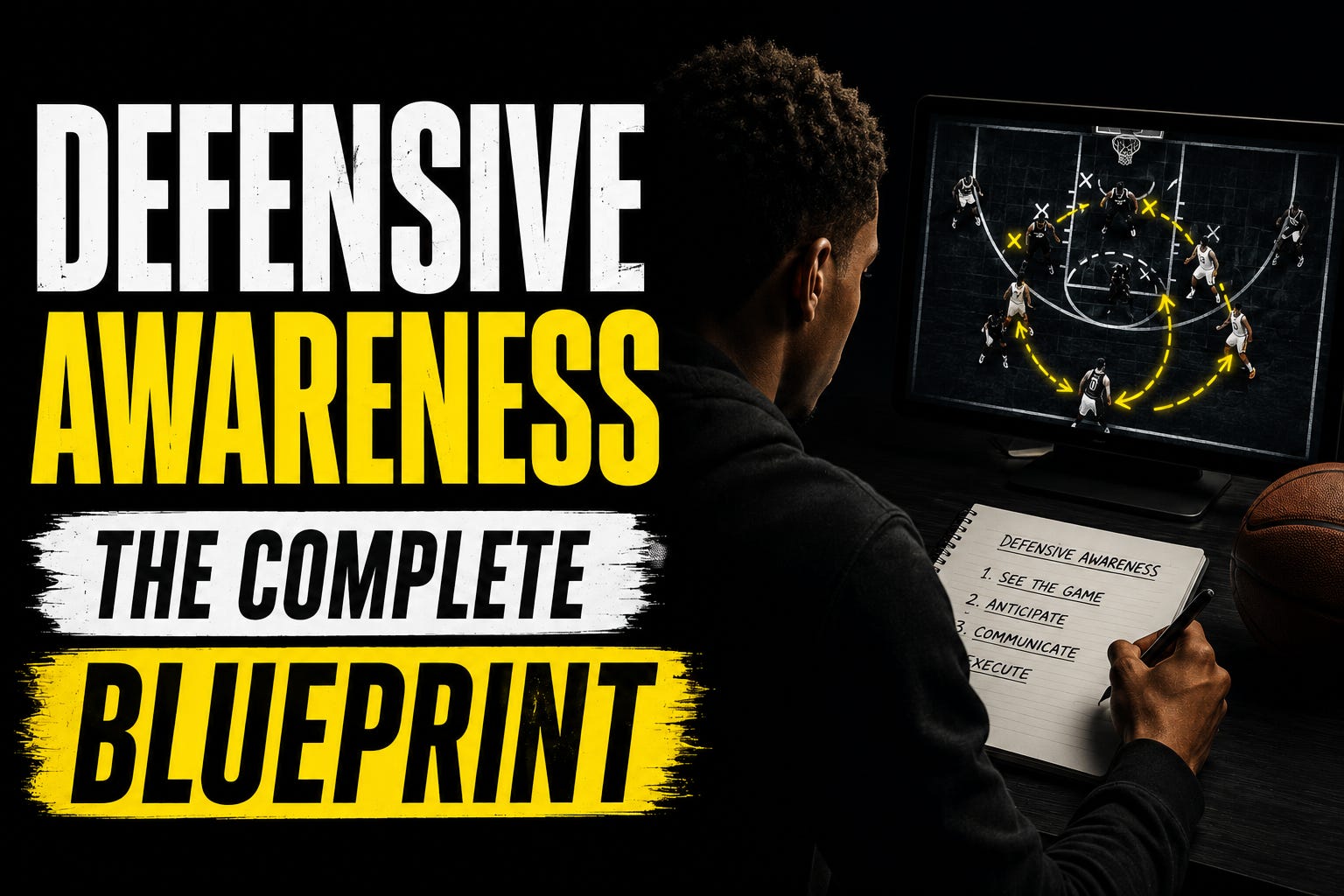
From X: Weekly Recap on Most Popular Posts
Quinn Snyder Defensive Clinic Notes (Link)
My Players React to the Physicality Narrative (Link)
Closeout Footwork (Link)
3 Keys to Blowing Up Ball Screens (Link)
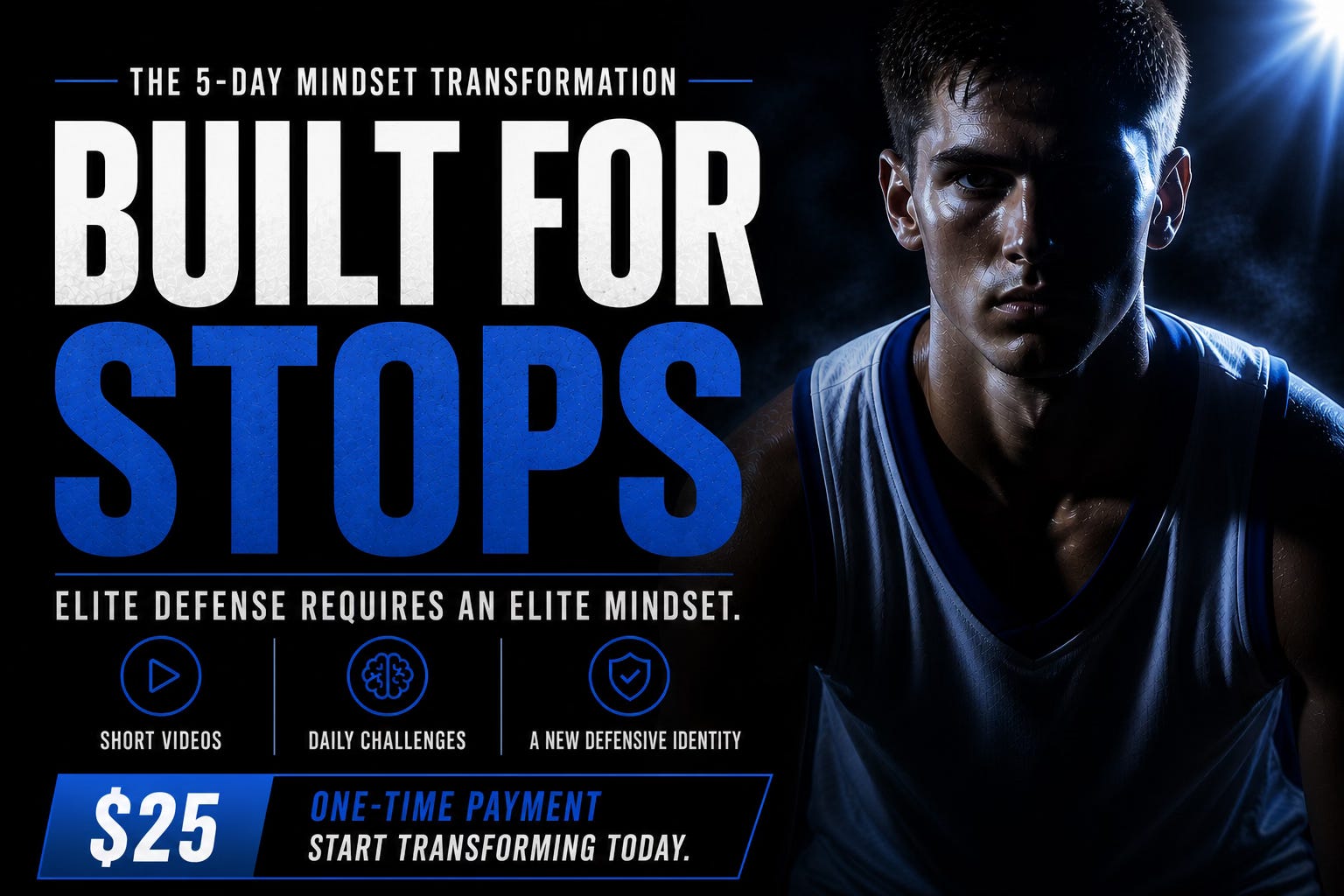
Built for Stops
Elite defense requires an elite mindset.
Most players train their body.
Very few train the mind.
Built for Stops is a 5-day defensive mindset transformation designed to reprogram how players think, react, compete, and respond on defense.
Inside the program, players go through five short lessons and daily challenges focused on building the mental weapons elite defenders rely on:
Alter Ego & Competitive Identity
Anticipation & Awareness
Reprogramming Fatigue & Discomfort
Defensive Communication & Presence
Confidence, Focus, and Resilience
No fluff. No empty motivation speeches. No “just believe in yourself” nonsense.
This is practical psychological training backed by my background in psychology and years spent studying elite defenders.
One mental upgrade every day.
One shift in how you think as a defender forever.
Only $25 ($5 per day)
Then Lifetime Access
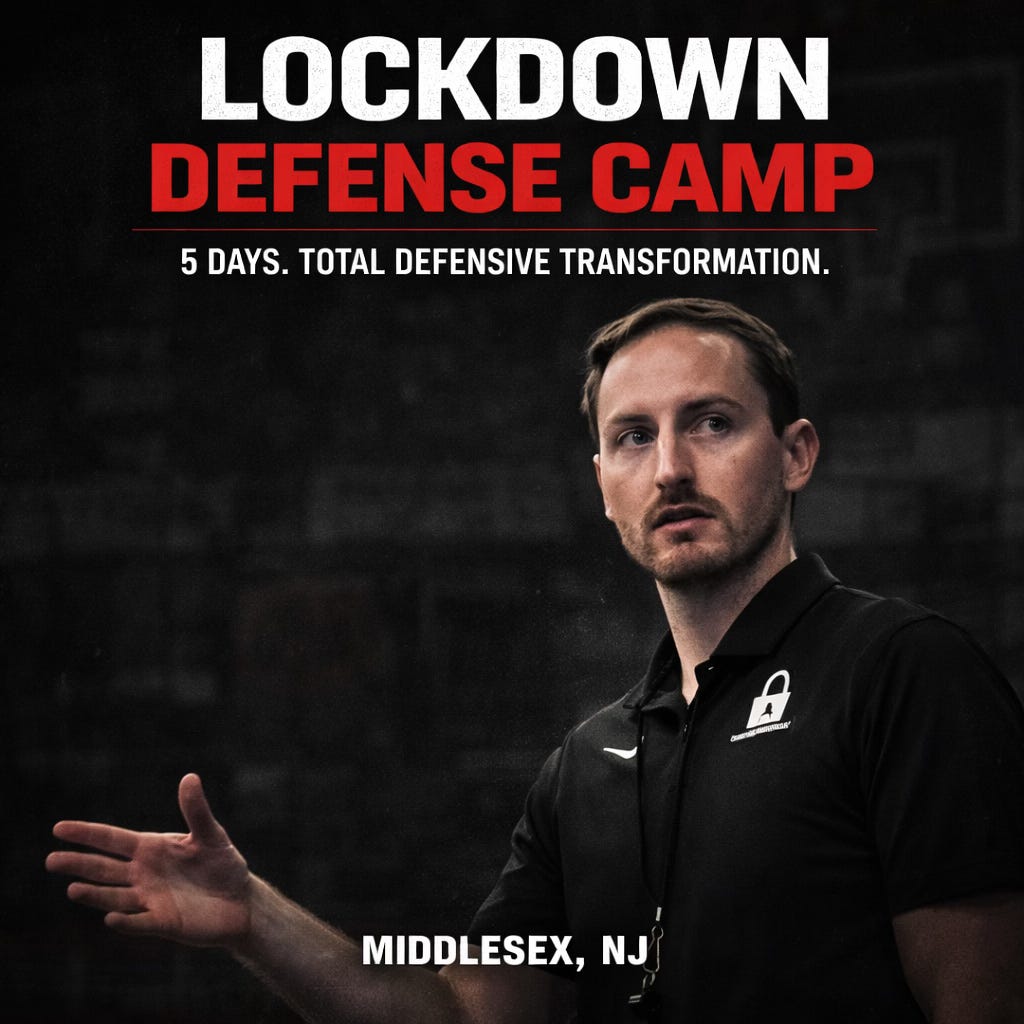
Lockdown Defense Camp
The Lockdown Defense Camp is open for registration — a 5-day intensive built for players who want to transform their game.
This isn’t a typical camp.
It’s a complete defensive system — covering footwork, positioning, anticipation, disruption, mindset, and so much more. Every session is designed to translate directly to game performance.
“Four days at this camp helped our son more than every other camp he’s ever attended.”
— Sonya Pusey
“There is no camp like it.”
— Jared Goldstein
Spots are limited and tend to fill quickly.
Registration is now open. Early Bird pricing available.